What is the method?
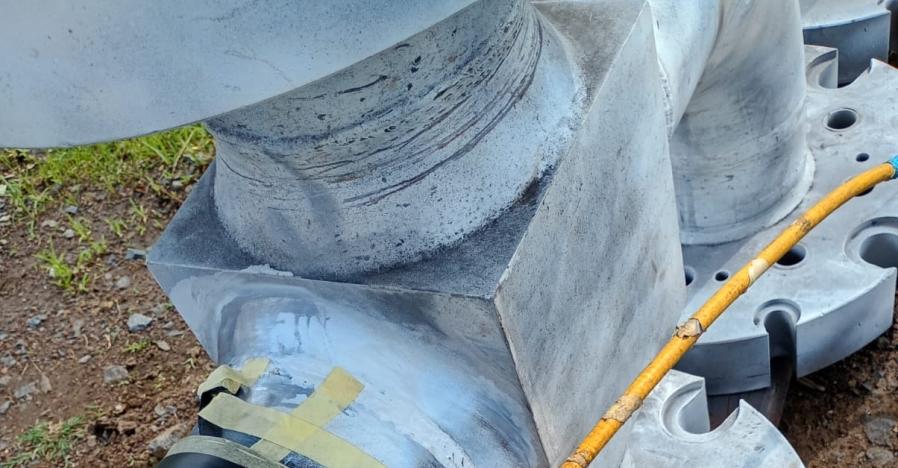
Radiographic Testing (RT) uses X-rays or gamma rays to examine the internal condition of materials and welds. Radiation passes through the component and differences in absorption create an image showing internal volumetric changes or discontinuities.
Application
Radiographic Testing (RT) uses X-rays or gamma rays to examine the internal condition of materials and welds. Radiation passes through the component and differences in absorption create an image showing internal volumetric changes or discontinuities.
Key Benefits
- Provides a permanent image record.
- Highly effective for volumetric defect detection.
- Suitable for fabrication QA/QC and compliance applications.
- Can assess internal condition without cutting the component.
Inspection Capabilities
- Provides a through-thickness image of internal volumetric condition.
- Particularly effective for identifying porosity, slag inclusions, shrinkage, and lack of root penetration.
- Allows retrospective review through retained radiographic records.
- Valuable where visual evidence of internal condition is required for acceptance.
Limitations
- Uses ionising radiation and requires strict safety controls.
- Less effective for planar defects depending on orientation.
- Often requires access to both sides of the component.