What is the method?
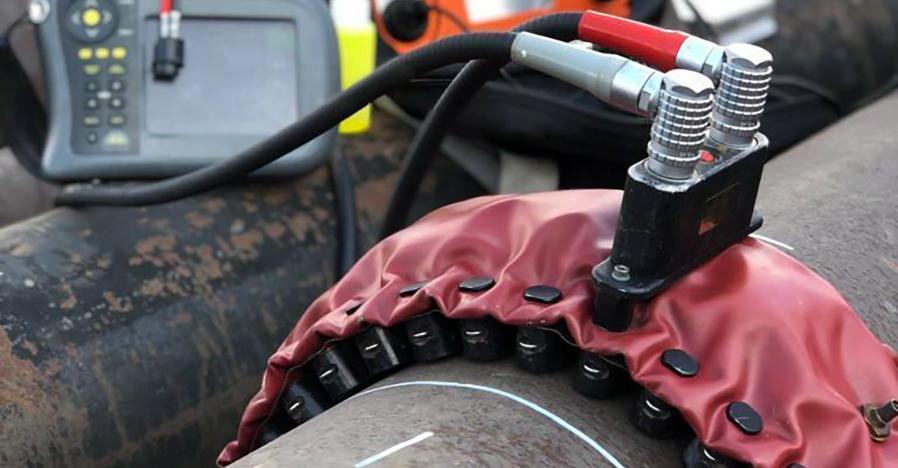
LRUT, also known as Guided Wave Testing, uses low-frequency guided ultrasonic waves to screen long lengths of pipe from one test location for changes in cross-sectional area.
Application
LRUT, also known as Guided Wave Testing, uses low-frequency guided ultrasonic waves to screen long lengths of pipe from one test location for changes in cross-sectional area.
Key Benefits
- Screens long pipe sections quickly.
- Reduces the need for widespread insulation removal or excavation.
- Helps prioritise follow-up inspection.
- Efficient for large piping populations.
Inspection Capabilities
- Can inspect tens of metres of pipe from a single test location.
- Particularly useful for inaccessible sections such as road crossings, elevated lines, buried transitions, and insulated pipe runs.
- Detects changes in cross-sectional area over long distances to support screening and prioritisation.
- Reduces access demand and exposure in difficult environments.
Limitations
- Screening method only; not a precise sizing technique.
- Indications require follow-up local examination.
- Pipe features, supports, and coatings affect signal behaviour.
- Requires experienced interpretation.