





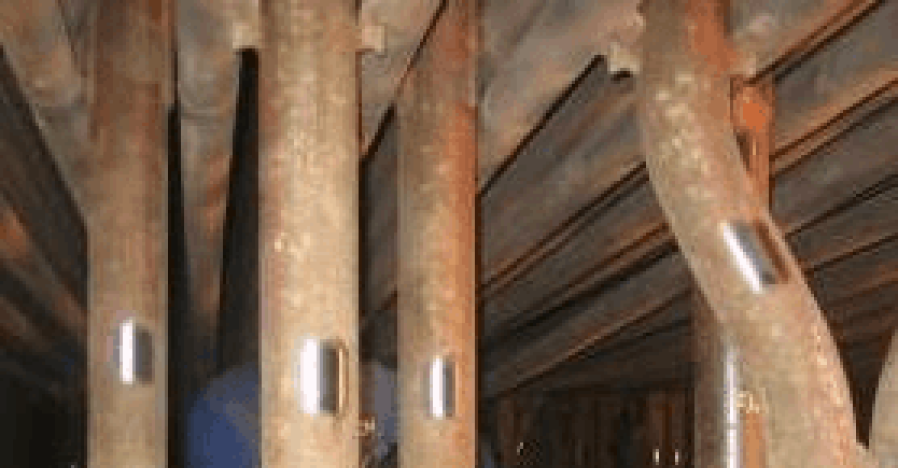
What is the method?
Metallurgical replication is an in-situ metallography technique used to assess the surface microstructure of critical components without removing a full material sample. A prepared surface is replicated and examined microscopically.
Application
Metallurgical replication is an in-situ metallography technique used to assess the surface microstructure of critical components without removing a full material sample. A prepared surface is replicated and examined microscopically.
Key Benefits
- Enables in-situ microstructural evaluation.
- Avoids destructive sectioning of large components.
- Supports remaining life assessment.
- Valuable for high-temperature integrity programmes.
Inspection Capabilities
- Provides direct information on microstructural condition, which conventional NDT methods cannot reveal.
- Particularly valuable for identifying creep cavitation, grain growth, carbide degradation, spheroidisation, and overheating effects.
- Supports life-consumption and serviceability decisions for high-temperature plant.
- Bridges the gap between NDT and metallurgical analysis.
Limitations
- Evaluates only the surface or near-surface microstructure.
- Requires specialised preparation and interpretation.
- Examination points must be carefully selected.
- Best used with service history and engineering assessment.