What is the method?
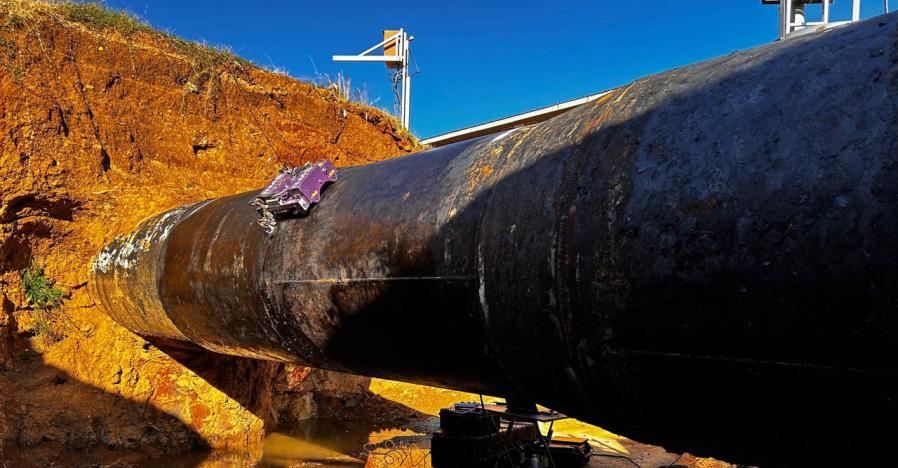
Automated Ultrasonic Corrosion Mapping (AUT) uses encoded mechanised scanning systems to collect high-density wall-thickness data across a defined area, generating corrosion maps and C-scan images.
Application
Automated Ultrasonic Corrosion Mapping (AUT) uses encoded mechanised scanning systems to collect high-density wall-thickness data across a defined area, generating corrosion maps and C-scan images.
Key Benefits
- High-resolution wall-thickness data.
- Detailed C-scan corrosion mapping.
- Repeatable and suitable for trending.
- Supports life assessment and repair planning.
Inspection Capabilities
- Provides large-area, high-density thickness coverage with strong repeatability.
- Particularly effective for quantifying pitting, erosion patterns, corrosion morphology, and localised wall thinning.
- Allows engineering decisions to be based on mapped representative data rather than isolated spot readings.
- Ideal for comparison of repeat scans in long-term monitoring programmes.
Limitations
- Requires access, setup, and surface preparation.
- More resource-intensive than basic thickness testing.
- Couplant management and scanner stability are important.
- Not always necessary for simple screening applications.