





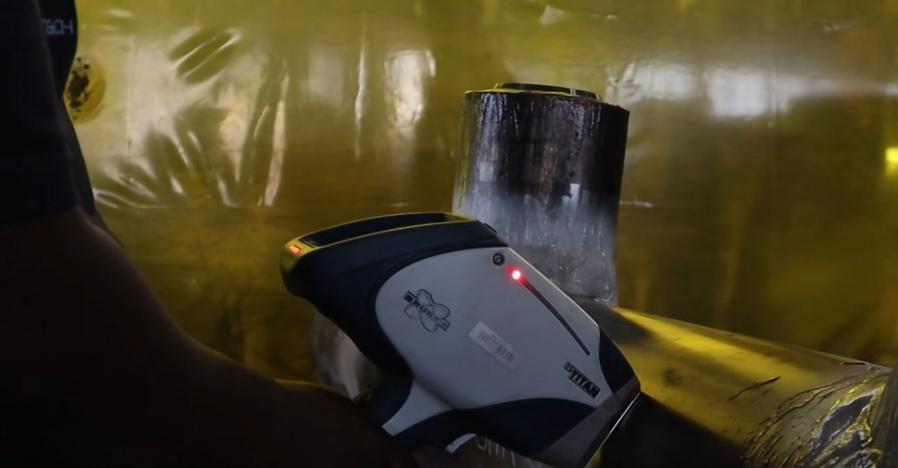
What is the method?
Portable PMI is a field-based alloy verification technique used to confirm the chemical composition of metallic materials using XRF, OES, and LIBS technologies.
Application
Portable PMI is a field-based alloy verification technique used to confirm the chemical composition of metallic materials using XRF, OES, and LIBS technologies.
Key Benefits
- Rapid on-site alloy verification.
- Helps prevent dangerous and costly material mix-ups.
- Supports QA/QC, traceability, and compliance programmes.
- Suitable for a wide range of specialty alloys.
- OES and LIBS extend capability for carbon-sensitive applications.
Inspection Capabilities
- Provides direct material chemistry verification, which conventional flaw detection methods cannot offer.
- Particularly valuable for confirming alloy grade, weld overlay composition, and material compliance.
- LIBS and OES improve identification where light element detection and carbon-sensitive grade separation are important.
- Essential for preventing wrong material installation in corrosion-critical, high-temperature, or high-pressure service.
Limitations
- Results depend on surface condition, calibration, and operator competency.
- XRF is limited in detection of light elements such as carbon.
- OES and LIBS may require better surface preparation and more controlled test conditions.
- LIBS is minimally invasive because it ablates a very small amount of surface material.
- Similar chemistries may require careful interpretation and robust procedure control.