Logo

Welcome to De-Tect Unit Inspection

Industrie is a modern factory website. specifically designed for who need construction, firms, oil, architecture and any other small business.

Subscribe & Follow

Corrosion Under Insulation (CUI)

Corrosion Under Insulation (CUI)

What is Corrosion Under Insulation (CUI)?

This method allows for non-invasive assessment of wall thickness, even through insulation or coatings in many cases, making it ideal for corrosion monitoring and integrity assessments in industrial environments. PEC is a rapid, non-contact survey technique ideal for baseline thickness mapping and long-term corrosion monitoring.


Method of Inspection | Applications

CUI inspection services are used to detect hidden corrosion beneath insulation, cladding, and fireproofing on piping, vessels, and equipment. These inspections support early detection, remaining life assessment, and the prevention of leaks, failures, and unplanned shutdowns.


Materials Suitable

  • Carbon steel
  • Low‑alloy steel
  • Insulated piping, vessels, and equipment

Inspection Capabilities

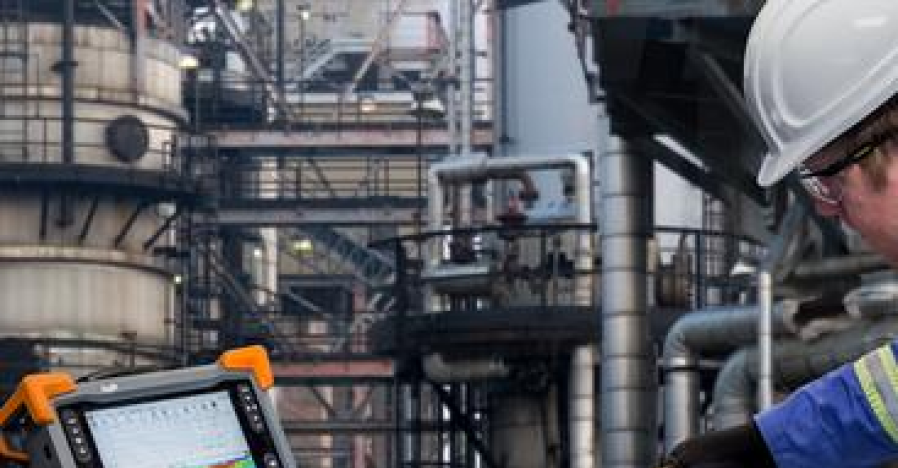
Using modern PEC equipment, a two-person team can survey and log up to 1,000 points per day, subject to accessibility.

PEC offers excellent repeatability and is uniquely capable of inspecting components under demanding conditions, such as:

  • Detection of CUI (Corrosion Under Insulation) and FAC (Flow Accelerated Corrosion)
  • Operation through dirty, coated, rough, or high-temperature surfaces
  • Suitable for temperatures up to 500 °C (930 °F) and as low as –100 °C (–150 °F)
  • Consistent, high-quality results across a wide range of environmental conditions
  • No removal of insulation or coating required
  • Capable of gauging wall thickness through:
    • Marine growth, neoprene, and Monel on risers
    • Cladding made from aluminium, stainless steel, or galvanised steel
    • Wet insulation, rough/encrusted surfaces, or irregular insulation
    • Wire mesh–reinforced insulation
  • Inspection can be performed while plant is in operation

Process Overview

The Pulsed Eddy Current (PEC) system monitors the decay of an eddy current pulse induced within the steel wall. It calculates the average wall thickness by analysing the transient time ("echo") of specific signal features and comparing these with reference data obtained from calibration standards.

The measurement is influenced by various material and environmental factors, including:

  • Magnetic and electrical properties of the metal (e.g., alloy composition, grain structure)
  • Temperature variations, which can alter signal response

A typical measurement cycle takes between 2 and 40 seconds, depending on wall thickness and material characteristics. During inspection:

  • Wall thickness and a validation signal are displayed in real time
  • All raw signal data is automatically recorded for traceability and post-analysis
  • Thickness values can be logged for trending or report generation

Industries We Serve

Oil & Gas, Petrochemical & Chemical Plants, Power Generation, Mining, Industrial Utilities


Key Benefits

  • Early detection of hidden corrosion
  • Reduced insulation removal and reinstatement costs
  • Improved safety and asset reliability
  • Reduced risk of leaks and failures
  • Supports risk‑based inspection (RBI) programs

Reporting & Deliverables

  • Inspection reports with photographic evidence which are available to our customers through our online reporting system
  • Thickness readings and corrosion maps
  • Risk ranking and prioritisation

Why Choose Us?

  • Experienced and certified NDT technicians
  • Asset‑specific inspection strategies
  • Reduced operational disruption
  • Clear, actionable integrity reporting

We use cookies to improve your experience. By continuing to use this site, you agree to our use of cookies.

Privacy Policy