What is Tank Floor Testing with MFL?
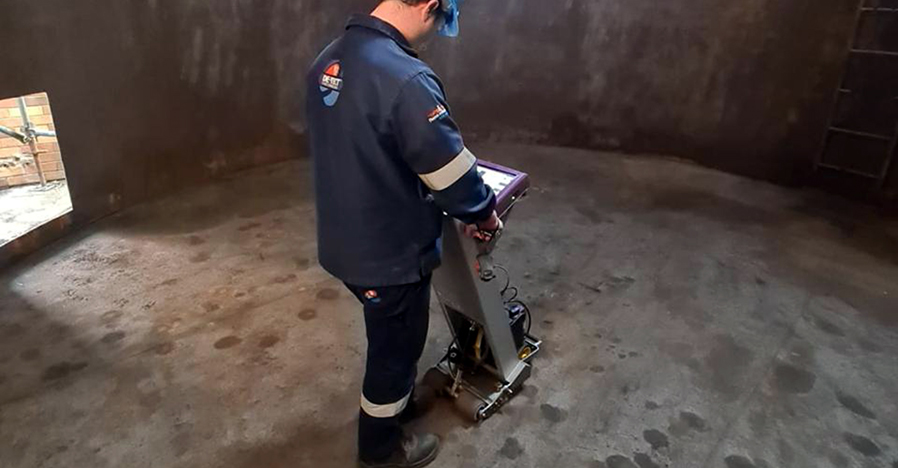
A corrosion detection technique for storage tank bottom plates. The storage of dangerous goods in tanks must be executed in a safe way. In order to reduce the economical as well as the environmental risks, a thorough knowledge of the tank condition, and in particular the tank bottom and shells, is of outmst importance.
Method of Inspection | Applications
Used to identify corrosion and pitting across tank floors. With the knowledge and inspection experience of De-Tect Unit Inspection, we provide your installation with added quality, cost reduction, business security and improved safety, for both existing and new installations. NDT gives a clear insight into the risk of leakage or other safety critical defects, which increased the integrity and safety within the installation and hence avoids undue operating expenses. Non-Destructive Testing of storage tanks include several methods of examining materials, componemts and connections in order to identify material defects add degradations
For the inspection of tank bottoms De-Tect Unit inspection offers you a quick and above all reliable inspection by combining two techniques: Magnetic Flux Leakage (MFL) and ultrasonic Testing (UT). By using these two techniques corrosion id detected effectively and reliably.
Materials Suitable
Carbon steel tank floors
Inspection Capabilities
- Full‑coverage scanning
- Corrosion mapping
Process Overview
- Scanner deployment
- Bottom plate scanning
- Data analysis
Industries We Serve
Oil & Gas Storage, Terminals
Key Benefits
- Comprehensive inspection
- Reduced tank downtime
- Accurate corrosion data
Reporting & Deliverables
- Floor corrosion maps
An online reporting system is available to our customers, allowing 24/7 access to reports.
Why Choose Us?
- Proven tank inspection expertise
- Reliable data quality
- Efficient execution